

Hong Kong’s banking sector is experiencing a critical transformation driven by artificial intelligence, with financial institutions racing to recruit and develop talent capable of navigating an increasingly complex technological landscape. The urgency stems from a rapidly evolving digital ecosystem where traditional banking skills are quickly becoming obsolete.
The Hong Kong Monetary Authority (HKMA) has projected that software development will represent the most significant skill shortfall by 2030, with 36% of banks identifying it as a critical constraint. This shortage isn’t just about technical prowess, but about understanding how AI can be effectively integrated into financial services.
Professionals in the banking sector now need more than traditional financial expertise. They must demonstrate the ability to work with and manage AI tools, comprehend automated decision-making processes, and troubleshoot potential errors. The capability to interact seamlessly with AI systems has emerged as one of the fastest-growing skill requirements in finance.
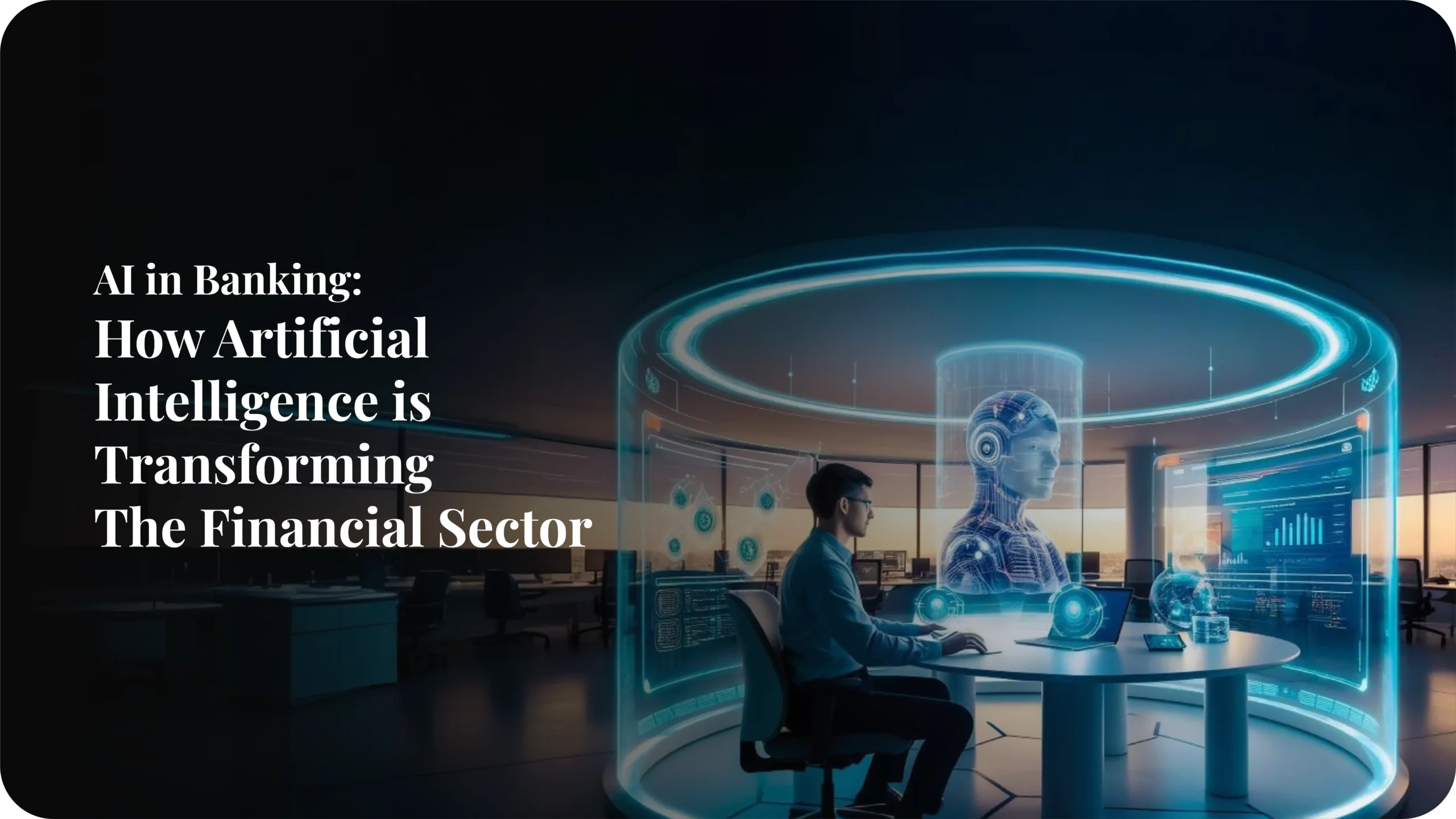
Recruiting AI and data specialists presents unique challenges. While demand for machine-learning talent is high across industries, many experienced AI professionals lack specific knowledge of banking products and regulatory constraints. This knowledge gap means new hires often require significant time to become fully productive.
Some forward-thinking institutions are proactively addressing these challenges. Banks like UBS Group AG and DBS Bank Ltd. have introduced in-house AI-focused certification programs designed to train employees in using AI tools for risk management, operations, and customer service. These initiatives represent a strategic approach to bridging the talent gap from within.
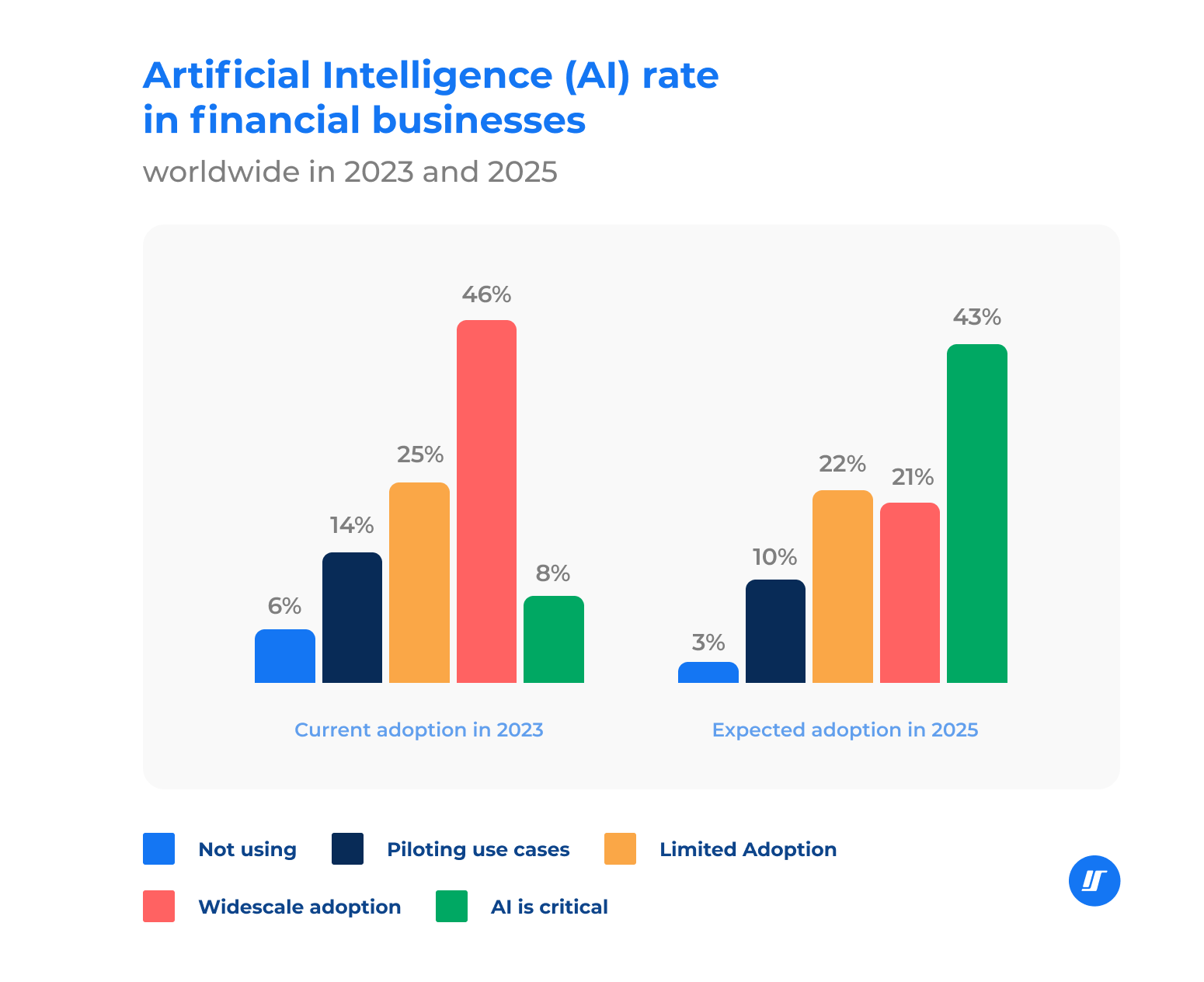
The broader technological adoption landscape reveals nuanced progress. According to Mercer’s Global Talent Trends 2025 report, only 37% of companies regularly use generative AI, and merely 7% believe it has fundamentally transformed their business model. Caution prevails, with many firms concerned about potential operational and reputational risks associated with AI technology.
Experts like Dora Leung from Randstad Hong Kong Ltd. advocate for a shift towards skill-based hiring over traditional experience-focused recruitment. This approach recognizes that adaptability and learning potential are increasingly valuable in a rapidly changing technological environment.
The implications extend beyond individual roles. Administrative positions, particularly in finance, are considered most vulnerable to automation. Organizations are likely to become leaner but potentially more profitable by reducing employment costs. Half of the organizations are already redesigning workflows to enhance productivity, with 61% in the early stages of transitioning to skill-driven operations.
For banking professionals, the message is clear: continuous learning and adaptability are no longer optional but essential. Workers with overly specialized skill sets risk becoming less competitive in an increasingly automated landscape. The most successful individuals will be those who can develop broader capabilities and remain agile in their skill development.
As Hong Kong’s banking sector stands at this pivotal moment, the path forward requires a delicate balance. Financial institutions must simultaneously manage regulatory compliance, technological innovation, and talent development. The skill gap remains significant, but strategic approaches to training, recruitment, and organizational culture can help bridge this divide.
The future of banking in Hong Kong will be defined not just by technological capabilities, but by the human capacity to understand, manage, and innovate alongside artificial intelligence. Those who embrace this challenge with curiosity, adaptability, and a commitment to continuous learning will be best positioned to thrive in this new era of financial services.