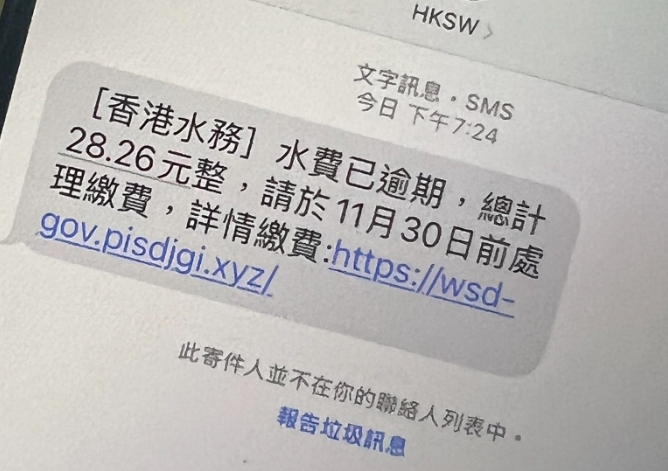


Residents of Hong Kong are facing a new digital threat as the Water Supplies Department (WSD) has issued a critical warning about a sophisticated text message scam targeting unsuspecting citizens. The fraudulent scheme involves deceptive messages designed to trick recipients into believing they need to pay their water bills through a fake website.
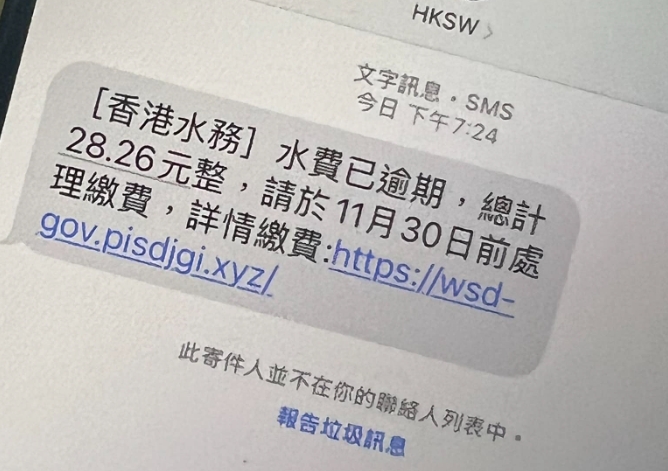
The scam operates by sending text messages that appear official, using a mix of traditional and simplified Chinese characters to create an illusion of legitimacy. These messages direct recipients to click on a link leading to a fraudulent website—wsdgov[.]com—which is completely unaffiliated with the actual Water Supplies Department.
What makes this scam particularly dangerous is its sophisticated approach to mimicking official communication. The fake website is crafted to look like a genuine payment portal, potentially tricking individuals into entering sensitive personal and financial information. The WSD has been proactive in addressing this threat, immediately reporting the matter to local law enforcement and releasing an official statement to warn the public.
For those concerned about their water bill payments, the department has provided clear guidance. Registered users of WSD’s electronic services can only access e-bills and generate FPS QR codes for payment through the official website (www.wsd.gov.hk), which requires proper user verification. This official channel remains the only secure method for managing water bill transactions.
The Hong Kong Police Force has further highlighted the risks by classifying the fraudulent website as “high risk” on their “Scameter” online risk-assessment tool. This classification serves as an additional warning for residents to exercise extreme caution when encountering unsolicited digital communications.
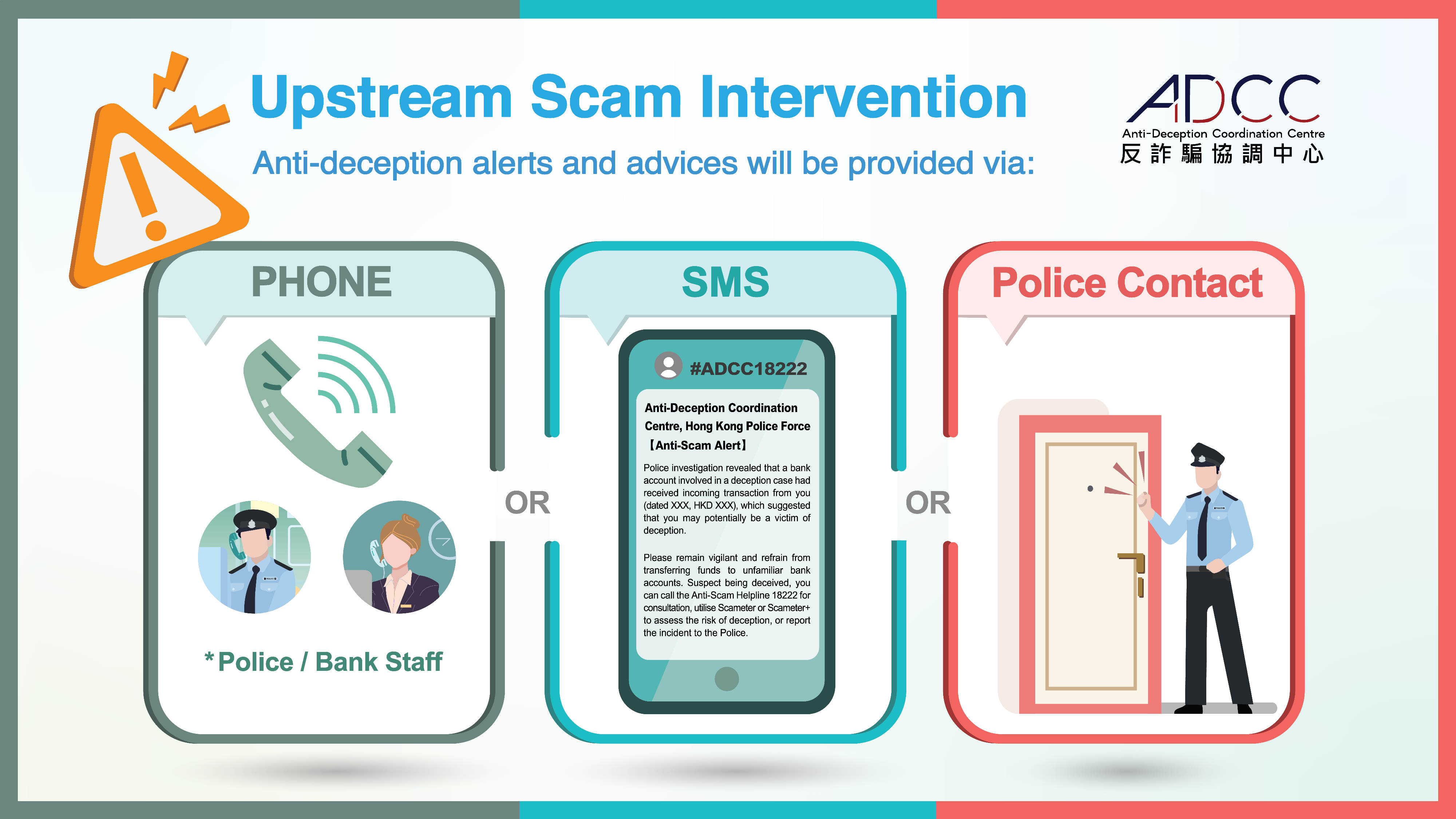
If individuals have accidentally shared personal information with the fake website, the WSD strongly recommends immediate action. Residents should contact the police promptly to mitigate potential risks of identity theft or financial fraud. For additional support and guidance, the department has made two helpline numbers available: their customer service line at 2824 5000 and the anti-scam helpline at 18222.
This incident underscores a broader challenge in the digital age: the increasing sophistication of online scams. Cybercriminals continually develop more convincing methods to exploit unsuspecting individuals, making digital literacy and vigilance crucial for personal protection.
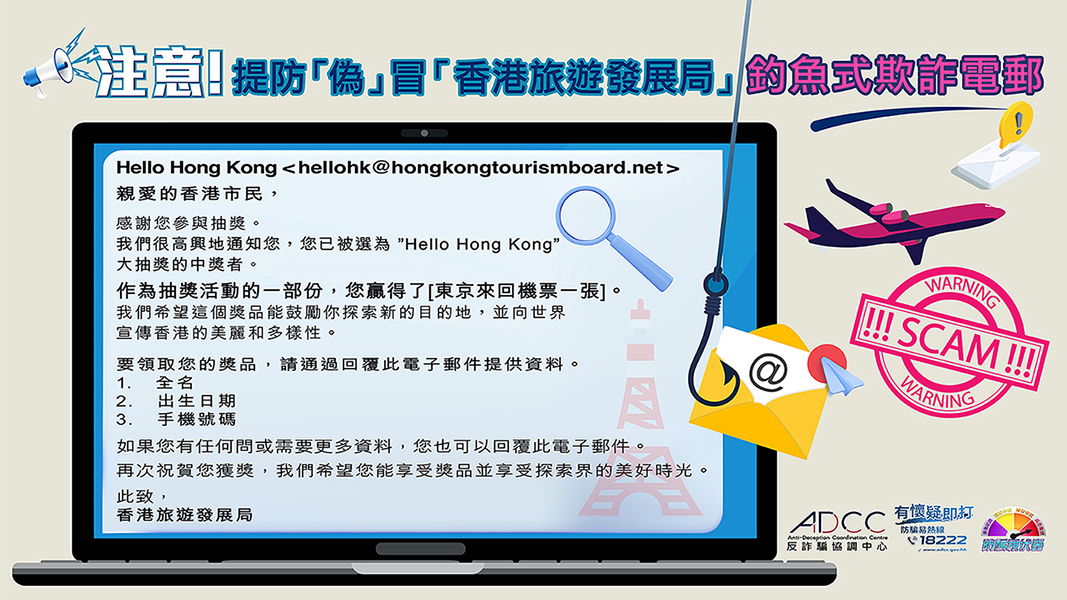
Key protective strategies include never clicking on suspicious links, verifying the authenticity of communications before taking action, and being particularly cautious about messages requesting personal or financial information. When in doubt, individuals should always contact the purported organization directly through official, verified channels.
The Water Supplies Department’s transparent communication and swift response demonstrate a commitment to public safety. By proactively warning residents and providing clear guidance, they are helping to build community resilience against digital fraud.
As digital threats continue to evolve, staying informed and maintaining a healthy skepticism towards unsolicited communications remains the best defense. Residents are encouraged to share this information with friends and family, helping to create a more informed and protected community.
For those seeking more information or experiencing concerns related to this scam, the provided helpline numbers offer immediate professional assistance and guidance.